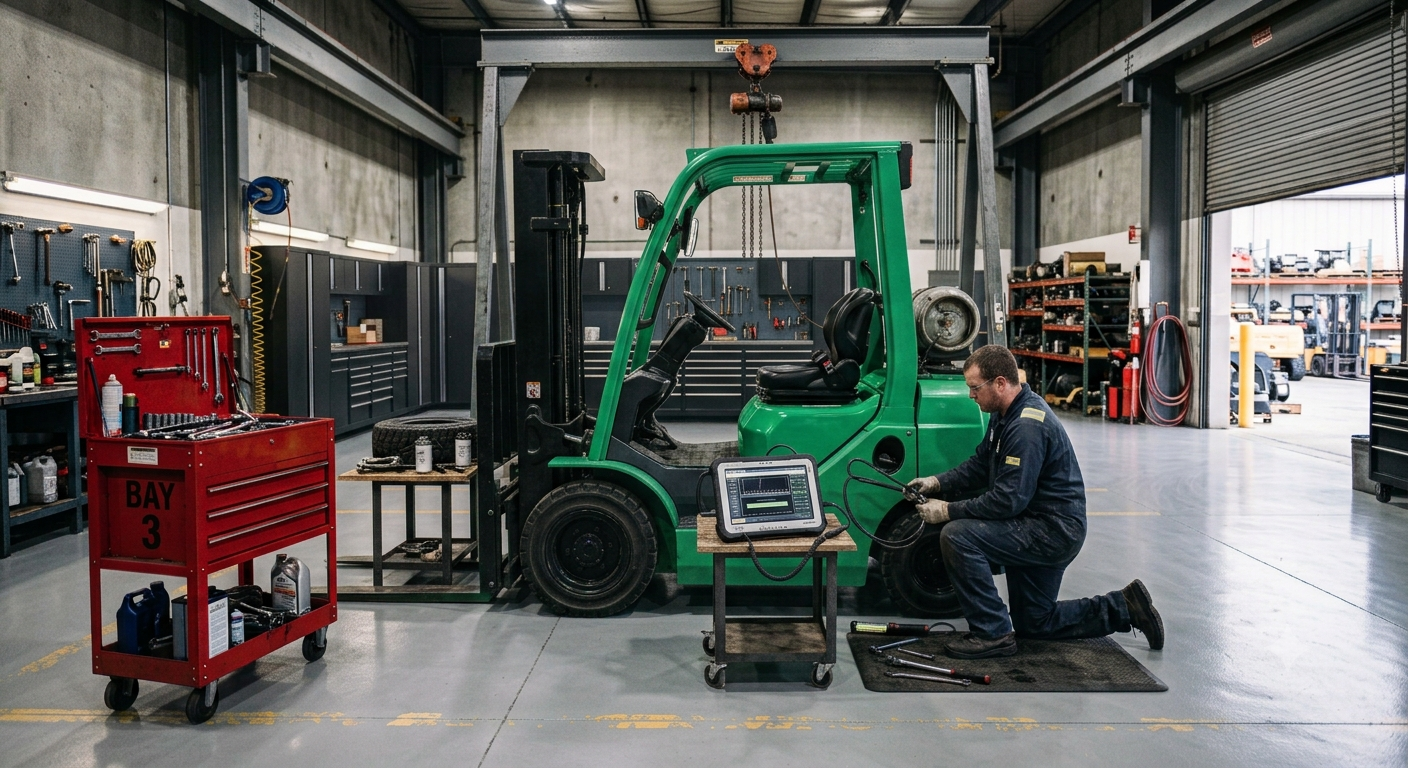
The Forklift Technician Shortage Is Costing Your Dealership More Than You Think
If you run a material handling dealership, you don't need a survey to tell you technicians are hard to find. But it helps to know you're not imagining it: a Modern Materials Handling reader survey found that 52% of warehouse operators were short one to five forklift technicians, and 22% described hiring and retaining technicians as a serious ongoing struggle.
That survey is a few years old now, and the forklift technician shortage hasn't eased since — if anything, dealers report it's gotten more competitive, not less. What hasn't caught up is how most dealers measure the cost of it.
Why the forklift technician shortage is different from a normal vacancy
General hiring research — SHRM puts the average cost of any unfilled position at roughly $4,129 over a 42-day vacancy — treats every open role the same way: salary not paid, minus productivity lost. That math undersells a technician seat badly.
Most dealers plan service department labor around one number: roughly 8 billable hours a day, per tech. That's not a soft estimate — it's baked into how shops quote labor, forecast revenue, and staff up. A generic office vacancy might cost you unrealized "productivity." An unfilled technician seat costs you billed revenue you already priced into the business and stopped collecting on the day the seat went empty.
That difference is why a forklift technician shortage hits a dealership's numbers harder, and faster, than the SHRM benchmark suggests.
How much is an unfilled technician position actually costing you?
Run the math on your own billing rate, fleet size, and current headcount, and the number tends to be larger than dealers expect — often well into six figures annualized for a multi-technician gap.
[Try the Tech Gap Calculator by clicking the image below — plug in your own numbers, see your own impact - the link will take you to the live calculator at EQWorx.net]
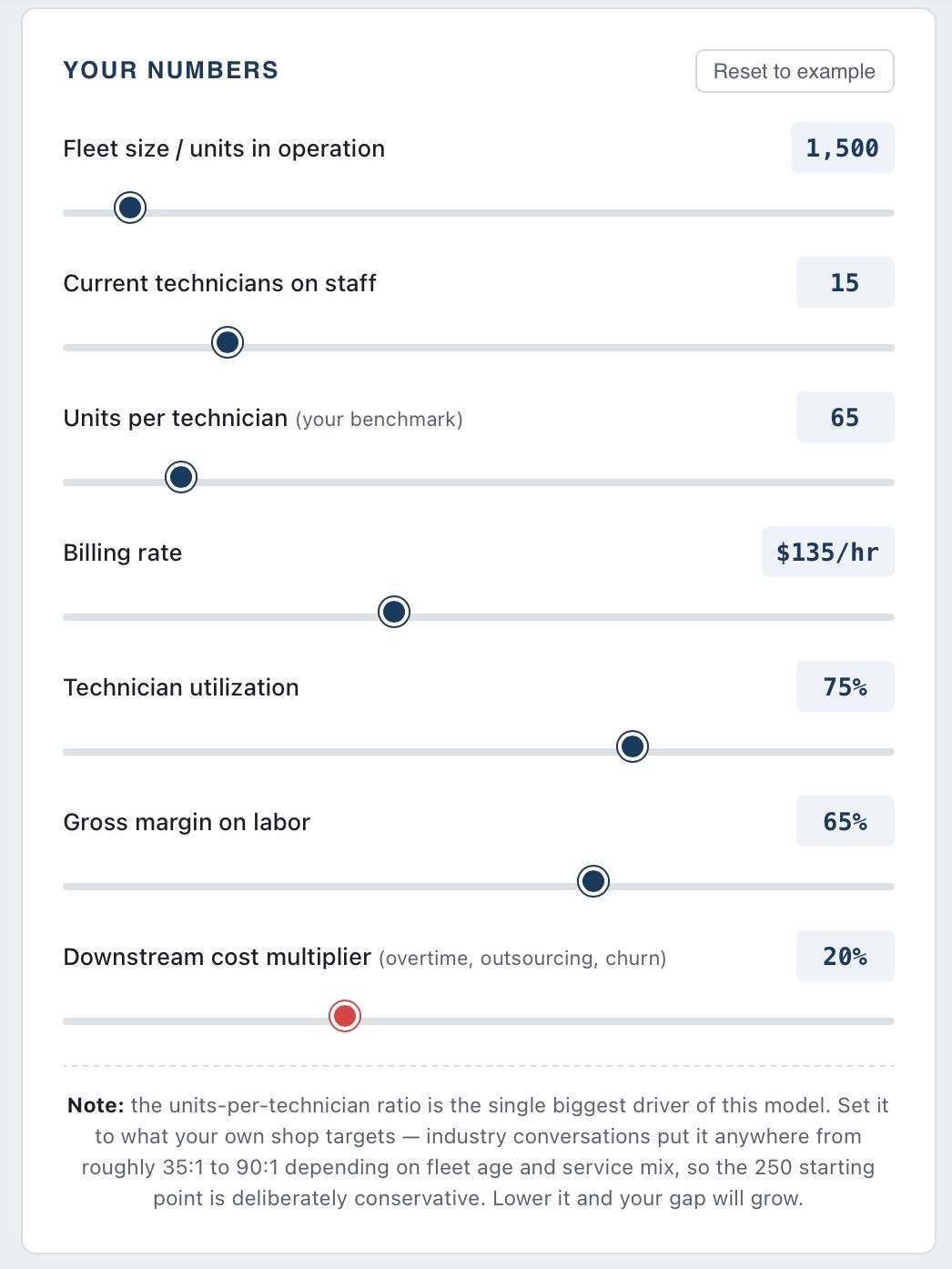
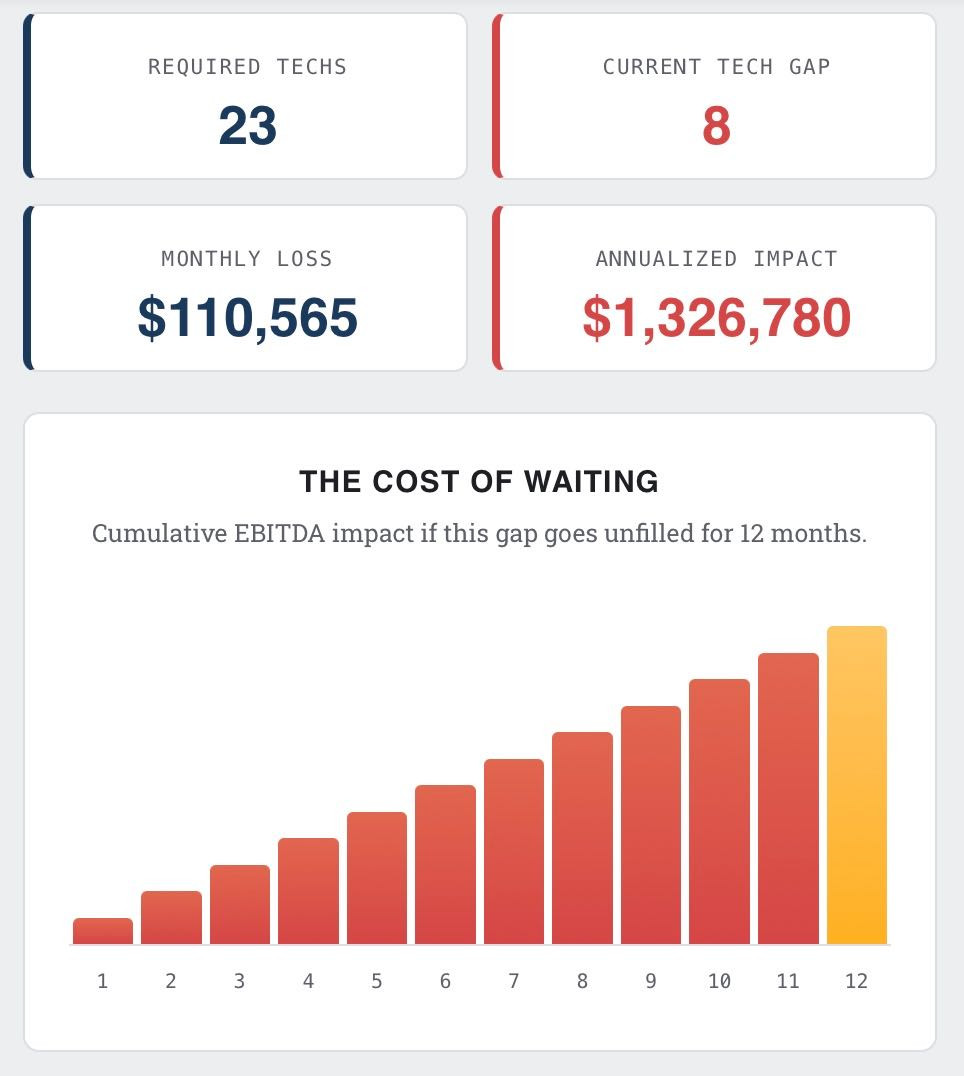
The number that tends to land hardest isn't the monthly figure — it's the twelve-month one. The dollar cost of a vacant seat doesn't change based on how the dealer is trying to fill it. What changes the total is only one thing: how long the seat stays open.
Why pay raises and job boards alone aren't solving it
Most dealers are only fighting the pay side of the forklift technician shortage — job board posts, sign-on bonuses, wage bumps to match the shop two towns over. In service-heavy trades broadly, entry-level technician turnover has been reported running close to 44% annually, and when technicians are asked directly why they stay somewhere, culture outranks pay by a wide margin. (That specific figure comes from research in adjacent service trades, not material handling specifically — worth knowing if you dig into it further, but the pattern tends to track across the industry.)
Winning a wage bidding war might fill a seat. It rarely keeps it filled — which means the shortage you're measuring today understates the one you'll be dealing with again in eighteen months.
What actually closes the gap
Three things tend to separate dealers who get ahead of their technician shortage from dealers who stay stuck in it:
- Speed to fill, not volume of applicants. A stack of unqualified resumes from a generic job board doesn't shrink the gap — it adds screening work on top of an already short-staffed service department.
- Sourcing built for material handling, not generalist labor. A recruiter who can't tell a reach truck from a rider pallet jack can't credibly screen for the role, which means more bad hires slip through, not fewer.
- A retention plan, not just a hiring plan. If the seat you just filled is likely to reopen in eighteen months, you haven't closed the forklift technician shortage at your dealership — you've rented a short delay on it.
That third point is the reason EQWorx.com focuses specifically on technician and PM placement for Material Handling dealers, rather than running a generalist staffing desk across every trade. It's a narrower lane on purpose.
If you want to see what closing your specific gap looks like, get in touch — or start with the calculator above and see your own number first.
FAQ
How many forklift technicians are dealers typically short? A Modern Materials Handling reader survey found just over half of warehouse operators were short between one and five forklift technicians, with roughly one in five describing hiring and retention as a serious ongoing struggle.
How much does an unfilled technician position cost a material handling dealer? It depends on fleet size, current headcount, and billing rate — but because dealers typically plan on roughly 8 billable hours per technician per day, an open seat represents real, already-priced-in revenue that stops getting collected. A calculator using your own numbers will give a far more accurate figure than any industry-wide average.
Is the forklift technician shortage getting better in 2026? Industry conversations across material handling and adjacent service trades continue to describe the shortage as an active, unresolved problem rather than one that's easing — though this is based on ongoing industry discussion rather than a single definitive annual study.
Does raising technician pay fix the shortage? It can help fill a seat, but retention data across service-heavy trades suggests culture and management, not just pay, are the bigger factors in whether a technician stays. Pay-only strategies tend to produce short-term fills rather than lasting ones.
Figures on turnover and industry-wide hiring dynamics referenced above include research from adjacent service industries as well as material handling-specific sources; where a stat is adjacent-industry rather than material handling-specific, it's noted in place. Treat industry-wide figures as directional context — the calculator above, built on your own inputs, is the more reliable number for your specific dealership.